Physical Therapy and Chiropractic: Combined Treatment Approach
You’ve been dealing with chronic back pain for months. Your doctor suggests physical therapy. Your friend swears by their chiropractor. You’re searching online and seeing recommendations for both. So which one do you choose?
Here’s the question nobody’s asking: why does it have to be one or the other?
The most effective treatment for most musculoskeletal injuries and chronic pain isn’t chiropractic care alone or physical therapy alone—it’s both, working together. When you combine chiropractic adjustments with targeted rehabilitation exercises and therapeutic techniques, you get faster recovery, better long-term results, and a lower chance of re-injury.
At Twin Cities Chiropractic in St. Paul, we’ve been providing this integrated approach for over 20 years. Dr. Scot Sorum’s chiropractic expertise, combined with structured physical therapy protocols, gives our patients comprehensive care that addresses both immediate pain relief and long-term functional recovery. Let me explain why this combination works so well and what it looks like in practice.
The Difference Between Chiropractic and Physical Therapy
They’re related but different approaches to treating musculoskeletal problems.
Chiropractic care focuses on spinal alignment and joint function. Chiropractic adjustments restore proper movement to restricted joints, reduce nerve irritation, and decrease pain. When a joint isn’t moving right, or a vertebra is misaligned, an adjustment corrects that structural problem. It’s a hands-on treatment that often provides immediate relief and restores normal joint function.
Physical therapy focuses on rehabilitation, strengthening, and movement patterns. PT uses exercises, stretches, and therapeutic techniques to rebuild strength, improve flexibility, correct improper movement patterns, and prevent re-injury. It’s about teaching your body to move properly and building the support structures that keep you healthy in the long term.
Here’s the thing: most injuries and chronic pain conditions involve both structural problems and functional weaknesses. Your back hurts because your spine is misaligned AND because your core muscles are weak. Your shoulder pain is due to joint dysfunction AND poor movement patterns. Treating only one side of that equation leaves you incomplete.
Why the Combined Approach Works Better
Think about it this way: if you have lower back pain from a misaligned pelvis and weak core muscles, what happens if we only adjust your spine? You feel better temporarily, but because your muscles aren’t supporting your spine properly, it goes right back out of alignment. You end up needing adjustments constantly.
What if we only do physical therapy exercises without addressing the misalignment? You’re trying to strengthen muscles around a joint that’s not functioning properly. The exercises might even hurt because you’re working against a structural problem. Progress is slow and frustrating.
But when you combine both? The adjustment restores proper joint alignment and reduces pain, which allows you to do the exercises properly. The exercises strengthen the muscles that support that alignment, which means the adjustment holds longer. Each approach makes the other more effective.
Research backs this up. Studies comparing combined chiropractic and physical therapy treatment to either approach alone consistently show better outcomes with the integrated approach. Patients recover faster, have better pain reduction, and have lower recurrence rates.
What Combined Treatment Looks Like
Here’s how the integrated approach works at Twin Cities Chiropractic:
Initial Evaluation
Dr. Sorum does a comprehensive evaluation that looks at both structural and functional issues. He’s checking your spinal alignment and joint function like any chiropractor would, but he’s also assessing muscle strength, flexibility, movement patterns, and areas of weakness.
He wants to know: What’s misaligned? What’s not moving properly? Which muscles are tight? Which are weak? How are you compensating? What movement patterns are contributing to the problem?
This complete picture tells him exactly what needs to be addressed through adjustments and what needs to be addressed through rehabilitation.
Treatment Phase 1: Pain Relief and Structural Correction
The first priority is usually getting you out of severe pain and correcting the structural problems. This is where chiropractic adjustments take the lead.
Dr. Sorum will adjust the restricted or misaligned areas, which typically provides significant pain relief. When you’re in acute pain, your body tenses up, and you can’t move properly. Getting that pain under control through adjustments allows you to start the rehabilitation process.
During this phase, we might also use passive therapies like ice, heat, or electrical stimulation to reduce inflammation and pain. Massage therapy from Joy Vang can release muscle tension and improve circulation, which supports healing.
Even in this early phase, we’ll start you on gentle exercises. Nothing aggressive—maybe some basic stretches or light movements to maintain mobility and prevent stiffness.
Treatment Phase 2: Active Rehabilitation
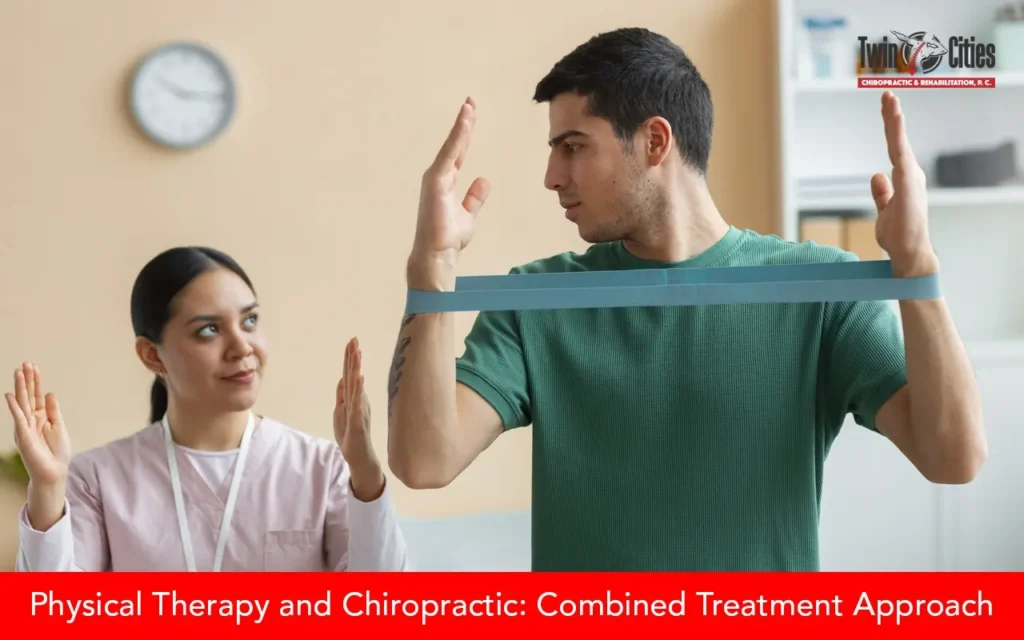
As your pain decreases and your joints are moving better, we shift focus to rehabilitation. The adjustments continue, but now we’re adding targeted exercises to strengthen weak areas, improve flexibility, and retrain proper movement patterns.
These aren’t generic exercises you could find on YouTube. They’re specific to your problem, your body, and your goals. If you’re recovering from a herniated disc, your exercises will focus on core stabilization and proper lifting mechanics. If you’re dealing with shoulder injuries from sports, you’ll do rotator cuff strengthening and mobility work.
Dr. Sorum shows you exactly how to do each exercise, watches your form, and corrects any compensatory patterns. Form matters more than how many reps you do. One perfectly executed exercise is worth more than ten sloppy ones.
You’ll do some exercises in the office during your visits, and you’ll have a home exercise program to do between appointments. Consistency matters. The patients who actually do their exercises at home get better faster and stay better longer.
Treatment Phase 3: Functional Restoration
Once you’re out of pain and have rebuilt basic strength, we focus on functional movements—the actual activities you need to do in daily life or your sport.
If you hurt your back lifting at work, we’ll work on proper lifting technique with progressively heavier loads. If you’re an athlete recovering from injury, we’ll incorporate sport-specific movements. If you’re dealing with chronic neck pain from desk work, we’ll address your workstation ergonomics and posture correction.
The goal is to get you back to doing everything you want to do without pain and without fear of re-injury.
Maintenance and Prevention
Once you’ve recovered, the question is: how do you stay healthy? This is where many people drop the ball. They feel better, stop doing their exercises, and six months later they’re back with the same problem.
We’ll create a maintenance program for you. This might be periodic chiropractic adjustments to maintain alignment, a simplified exercise routine to maintain strength and mobility, or just check-ins every few months to make sure you’re staying on track.
Some patients continue with monthly wellness care because they like how they feel when their spine is properly maintained. Others graduate completely once they’ve built the strength and movement patterns to stay healthy on their own.
Conditions That Respond Best to Combined Treatment
Pretty much any musculoskeletal injury or chronic pain condition benefits from this integrated approach, but some respond particularly well:
Auto accident injuries like whiplash need both structural correction and rehabilitation. The trauma from a car accident causes spinal misalignment that needs to be adjusted, but it also damages soft tissues and creates weakness that needs rehabilitation.
Sports injuries require getting the joint moving properly through adjustments, then rebuilding strength and correcting the movement patterns that contributed to the injury. An athlete with a shoulder injury needs proper joint function AND strong, balanced shoulder muscles to get back to their sport safely.
Chronic back pain that’s been going on for months or years usually involves both structural problems and significant muscle weakness or imbalance. Adjustments alone might provide temporary relief, but without strengthening the core and correcting movement patterns, the pain comes right back.
Sciatica from herniated discs or nerve compression responds well to adjustments that take pressure off the nerve, combined with exercises that strengthen the core and stabilize the spine to prevent recurrence.
Post-surgical rehabilitation benefits from chiropractic care to ensure proper joint function and alignment around the surgical site, combined with PT exercises to rebuild strength and restore full function.
Workplace injuries from repetitive strain or poor ergonomics need adjustments to correct the accumulated damage, plus exercises and ergonomic training to prevent the same injury from happening again.
Postural problems causing chronic pain need structural correction through adjustments AND strengthening exercises to actually hold the correct posture. You can’t just tell someone to “stand up straight” when their muscles aren’t strong enough to maintain that position.
Real-World Example: Lower Back Pain Recovery
Let me walk you through what combined treatment looks like for someone with chronic lower back pain:
Week 1-2: You come in 2-3 times per week. Dr. Sorum adjusts your lumbar spine and pelvis, correcting the misalignment that’s causing your pain. You might also get massage therapy from Joy to release the tight muscles in your lower back. You start with basic stretches and gentle core exercises at home.
Week 3-4: You’re coming in twice a week now. The adjustments continue, but now you’re doing more active exercises during your visits. Dr. Sorum teaches you proper core engagement, shows you how to do a plank correctly, and introduces you to exercises that strengthen your deep stabilizer muscles. Your pain is significantly reduced.
Week 5-8: Weekly visits now. You’re still getting adjusted, but the focus is on rehabilitation. You’re doing more challenging exercises—deadlifts with proper form, single-leg balance work, rotational movements. Dr. Sorum is watching your movement patterns and correcting any compensatory habits.
Week 9-12: You’re coming in every other week. You’re mostly pain-free now. The adjustments are maintenance. The exercises are progressing to ensure you can handle everything you need to do in daily life. You’re learning proper lifting technique, proper sitting posture, and which exercises to keep doing long-term.
3+ months: You’ve graduated to monthly check-ins or as-needed care. You have a home exercise routine you do 2-3 times per week. You know how to lift properly, you know what movements to avoid, and you know the warning signs that you need to come in for an adjustment.
This is complete care. You’re not just pain-free—you’re functionally stronger and less likely to hurt your back again.
The Role of Patient Compliance
Here’s the hard truth: this approach only works if you actually do the exercises. The patients who get the best results are the ones who show up for their appointments and do their home exercises consistently.
I’ve seen people with severe injuries recover completely because they committed to the program. I’ve also seen people with minor problems drag on for months because they only wanted to come in for adjustments and wouldn’t do the exercises.
The exercises aren’t punishment. They’re not optional add-ons. They’re half of your treatment. If you’re only doing half the program, you’re going to get half the results.
Why Choose Twin Cities Chiropractic for Combined Care
Not every chiropractic office offers integrated physical therapy. Many chiropractors only do adjustments and send you home. Some refer you to a separate physical therapy clinic, which means you’re going to two different places, working with two different providers who might not be communicating with each other.
At Twin Cities Chiropractic, you get everything in one place under one comprehensive treatment plan. Dr. Sorum has over 20 years of experience integrating chiropractic care with rehabilitation protocols. He understands how to progress patients from acute pain through full functional recovery.
You’re not bouncing between different providers with different philosophies. You have one doctor who understands both the structural and functional components of your problem and creates a unified treatment plan.
Our location at 506 N. Lexington Parkway in St. Paul makes it easy to get consistent care. You’re not driving to one place for adjustments and another for PT. Everything happens in one convenient location.
We also work cooperatively with your insurance. Many insurance plans cover both chiropractic care and physical therapy, and we handle the billing and documentation.
Getting Started with Combined Treatment
If you’re dealing with an injury, chronic pain, or recovering from surgery, don’t settle for partial treatment. Get the comprehensive care that addresses both structural correction and functional rehabilitation.
Call Twin Cities Chiropractic and tell us what’s going on. Dr. Sorum will evaluate your condition and create a treatment plan that includes both chiropractic adjustments and rehabilitation exercises tailored to your specific needs.
Whether you’re recovering from a work injury, dealing with chronic pain, or trying to get back to your sport after an injury, the combined approach gives you the best chance of complete recovery.
You don’t have to choose between chiropractic and physical therapy. Get both, get better, and stay better.
Ready for comprehensive treatment that combines chiropractic care and physical therapy? Call Twin Cities Chiropractic at 651-224-1921. Dr. Sorum provides integrated care at 506 N. Lexington Parkway in St. Paul. Over 20 years of experience helping patients fully recover from injuries and chronic pain. Call today or book online.